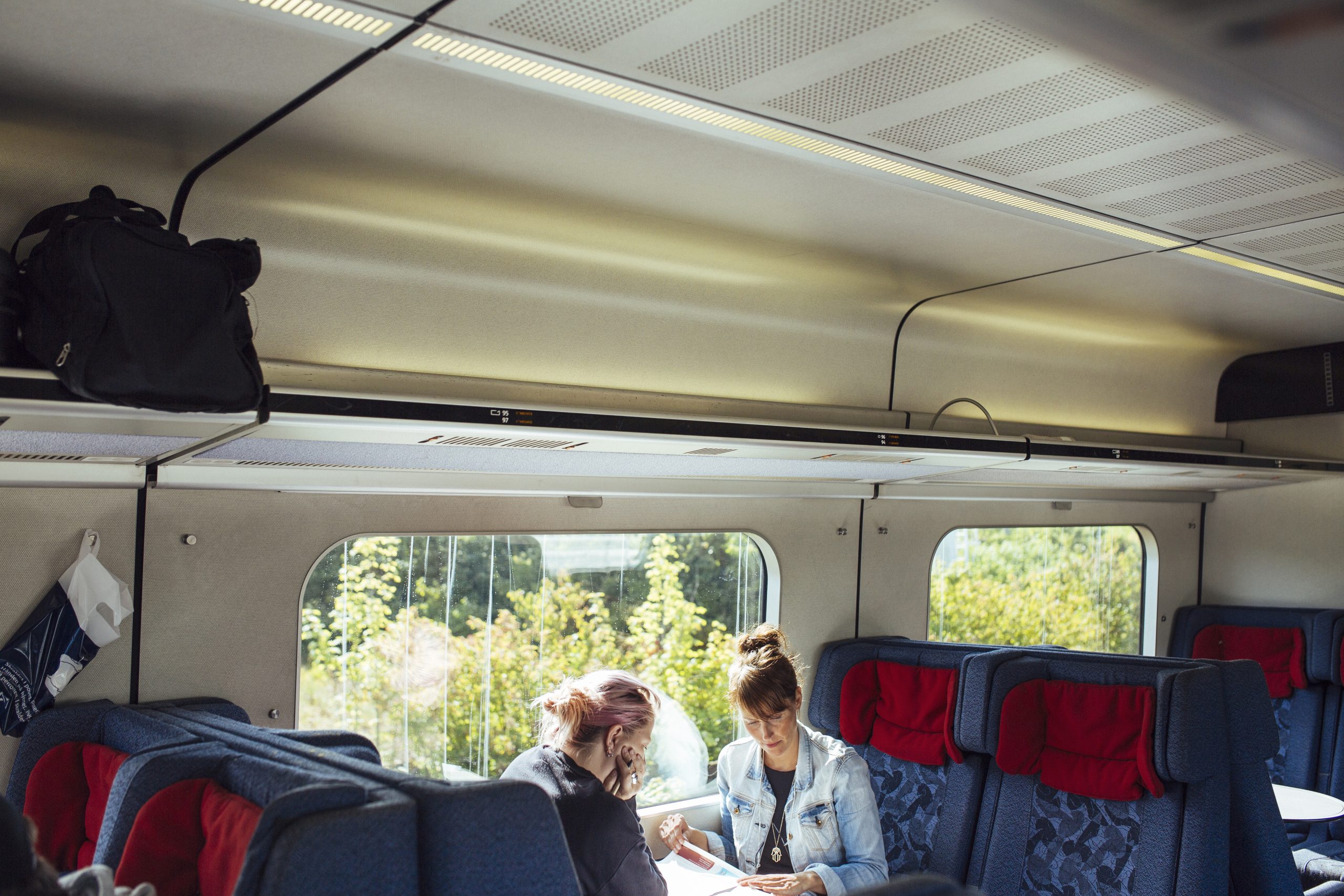
Seat 36A looked safe enough. The carriage was empty, save for an old gentleman at the far end already nodding off, and an aging woman in 37A, now looking at me with warm curiosity.
“Do you mind?” I asked, nodding toward the empty seat opposite hers. The overnight train from London to Scotland could be a lonely place, and some company was better than none.
“Not at all,” she beamed, clearly delighted.
We exchanged the usual pleasantries as I settled in. Her name was Ursula, and she was travelling to Inverness to visit her ailing father. A long journey, she admitted, but one she made monthly. He was her only living relative. After the weekend, she’d return to her quiet life in Croydon.
“And you?” she asked. “Visiting someone special?”
“No,” I replied, “job interview at Roche Diagnostics in Edinburgh tomorrow afternoon. Wanted to arrive fresh and focused, so the overnight seemed ideal.”
“Oh, very fancy,” she teased. “You must be terribly clever to secure an interview there.”
I explained I’d graduated top of my class at UCL, worked with several firms in London, and was now being headhunted.
“Well then,” she smiled, “your mother must be very proud.”
There it was, the moment I always dreaded.
“She would be,” I replied. “But I lost her while I was still in college.”
Ursula’s face filled with genuine regret. She opened her oversized bag and proceeded to unpack what at first appeared to be her entire kitchen. Homemade sandwiches, fruit, and her self-proclaimed famous carrot cake were laid out as she poured us both tea from her thermos.
“You’ve enough here to feed an army,” I said, laughing.
“Old habits,” she replied with a shrug.
Eager to avoid any return to the subject of my mother, I nodded toward the old man at the end of the carriage.
“Perhaps he’d like some cake?”
The man had stirred, roused by the rustle of foil and scent of food.
“Great thinking,” Ursula winked. She quickly bundled a slice of cake and two sandwiches into a napkin and brought them over. She returned a moment later. “His name’s Oliver. Sweet man. Grateful for the food but he didn’t want company.”
After tea, she regarded me with a curious tilt of her head.
“You know,” she said, “I was watching you at the station.”
The comment made me shift, uneasy. “Oh? Why?”
“I’m not sure. There’s just something about you.”
I had been admired for my looks before but this felt different. She was studying me like she was trying to place me in an old photo that she couldn’t quite remember.
“Never mind me,” she laughed, “I’m just a silly old woman.”
“You’re not old.”
“Sixty-three,” she declared proudly. “Old enough to be your mother.”
My mother again. The air tensed. I diverted quickly, asking about her family.
Her demeanour shifted as she told me her story.
“My mother died five years ago. Cancer.” She said it like a fact she’d grown numb to, a line rehearsed over years. “I had a sister once, Elsie. She passed… fifteen years ago, I think.”
“I’m sorry. Was it cancer too?”
“Truthfully, I don’t know. We hadn’t spoken in years.” Her voice thickened. “She got pregnant at sixteen. Back then, that sort of thing brought shame. So they sent her away to a home to have the baby. We never heard from her again. I only learned she’d died from the notice in the London Echo.”
“What about the child?”
“What child?” she blinked, then remembered. “Oh. The baby. Probably adopted. That was the way. The nuns always found wealthy families to take them in. Better life, really, Elsie couldn’t have looked after a child.”
“More cake?” she offered suddenly, as if eager to smother the weight of her story beneath another slice.
I declined politely. We passed the next few hours with small talk, her passion for baking, mine for kite-surfing, the housing crisis, even the weather. Nothing that mattered.
As dawn crept through the windows, they announced our approach to Edinburgh.
“That’s me,” I said, rising. Ursula was dozing now, and Oliver still snored softly at the end of the carriage.
I leaned down, gently shaking her shoulder. “Ursula, just wanted to say goodbye. My stop’s next.”
Bleary-eyed, she blinked at me. “Nice to meet you, Jenny,” she murmured.
I didn’t leave. I slid into the seat beside her, took her chin in my hand, and made her look at me.
“I want to tell you the rest of my story,” I said quietly. “My mother was raped by her father. When she became pregnant, she was hidden away, sent to one of those homes. Her mother and sister believed that monster and abandoned her. The child wasn’t adopted. She grew up in that place, working like a slave until the state shut it down.”
Ursula’s face drained of colour.
“My mother’s name,” I whispered, “was Elsie.”
Panic crept into her eyes as the weight of recognition sank in.
“You see, Auntie Ursula, I may be just a stranger on a train to you. But you, you are everything I despise in this world.”
She reached out trying to grab me, but the poison I’d slipped into her tea was already taking hold. Her limbs stiffened. Her breath slowed. By the time they checked the train in Inverness, she would have been dead for three hours.
I stepped onto the platform and turned back to watch her through the window with her face contorted in frozen agony. Oliver who had proved the perfect distraction was still sleeping soundly.
As the train pulled away, I checked my phone. There was still time for coffee before I made new plans.
Next stop: Grandad.